Remembering Michael Wright: The Fire, Vulnerability and Soul Behind Every Role

Some performances entertain us. Others stay with us.
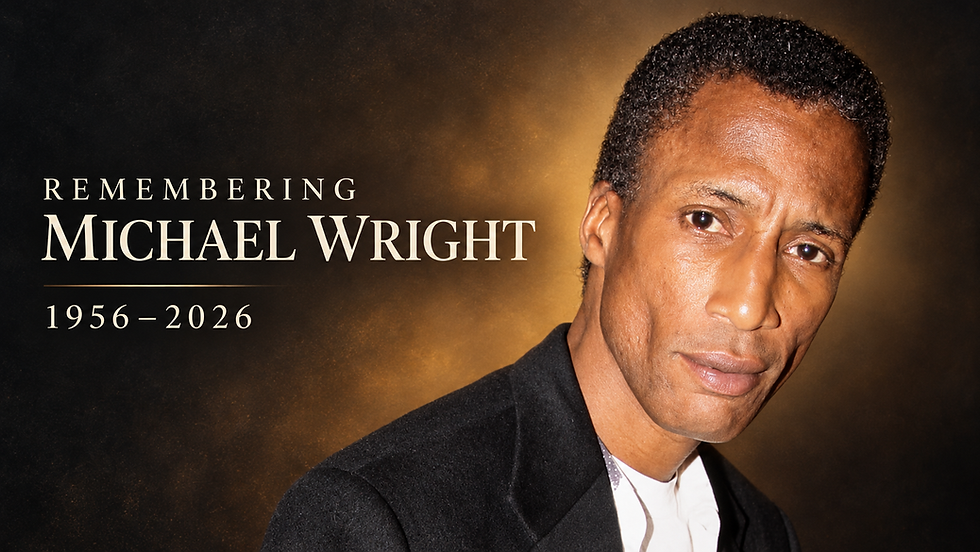
Michael Wright belonged to that rare class of actors who could leave a permanent mark with a single look, a fractured line of dialogue or an emotion that seemed to come from somewhere deeper than the script.
Best remembered by many as Eddie King Jr. in The Five Heartbeats, Wright brought an intensity and vulnerability to the screen that made his characters impossible to forget.
Wright died on August 19, 2026, in Los Angeles at the age of 70.
His family said he experienced heart failure and complications associated with Marchiafava-Bignami disease, a rare neurological disorder.
His wife, Susan Wright, remembered him as a husband, father, grandfather, friend and extraordinary artist whose work touched generations.
Born in New York City on April 30, 1956, Wright began building his acting career during the late 1970s.
One of his earliest film appearances came in the 1979 cult classic The Wanderers, but it quickly became apparent that he possessed something beyond traditional screen presence.
He could make volatility feel human. Even when portraying men overtaken by ambition, addiction, anger or desperation, Wright allowed audiences to see the wounded person underneath.
That ability was powerfully displayed in Robert Altman’s 1983 film Streamers. Wright and his fellow principal cast members received the Volpi Cup for Best Actor at the Venice Film Festival, establishing him as a serious dramatic performer long before he stepped into his most widely celebrated role.
For a generation of viewers, however, Michael Wright will forever be Eddie King Jr.
Robert Townsend’s The Five Heartbeats was more than a film about a fictional singing group. It told a larger story about brotherhood, exploitation, temptation, addiction and the price of pursuing success in the music business.
As the group’s commanding lead singer, Eddie possessed undeniable talent but he was also fighting personal battles that fame could not silence.
Wright made every side of that conflict believable.
He gave Eddie the confidence of a star, the instability of a man losing control and the vulnerability of someone still hoping to be saved.
His performance helped transform Eddie King Jr. into one of the most memorable characters in Black cinema.
More than three decades after the film’s release, audiences continue quoting his lines, revisiting his scenes and debating the character’s choices.
That kind of cultural endurance cannot be manufactured.
Wright’s career, however, extended far beyond one defining performance.
He played Elias Taylor across the influential science-fiction franchise V, appeared opposite Wesley Snipes in the crime drama Sugar Hill and brought another unforgettable intensity to the role of Omar White in HBO’s Oz.
His credits also included The Principal, Money Talks, Miami Vice, New York Undercover, Nash Bridges and Black Lightning. His final film appearance came in the 2025 production Dope King. Variety
Throughout those performances, Wright never seemed interested in simply being seen.
He committed himself completely to the emotional reality of the character.
His work could be unpredictable, uncomfortable and deeply moving sometimes within the same scene.
That was his gift.
Michael Wright represented a tradition of character acting in which truth mattered more than polish.
He was willing to show the contradictions inside people: strength alongside fear, charisma alongside pain and destruction alongside the possibility of redemption.
He made flawed men feel fully alive.
We may be saying goodbye after the first wave of tributes has passed, but remembrance does not have an expiration date.
Michael Wright’s legacy remains present every time a new viewer discovers The Five Heartbeats, every time Eddie King Jr.’s story sparks another conversation and every time an actor studies how vulnerability can make even the most explosive performance feel honest.
Michael Wright gave audiences characters they could not easily shake and an artistic legacy that will continue speaking long after the final credits.
Rest in peace, Michael Wright.
April 30, 1956 – August 19, 2026


Comments